Manga: Inside Mari
November 14, 2022 · 1 comment
By Jeannette Ng.

Inside Mari begins with a seemingly simple bodyswap where Isao Komori, a depressed shut-in and college dropout wakes up in the body of Mari Yoshizaki, the teenage girl he has been pining after. But instead of silly misunderstandings and even sillier shenanigans that that premise implies — Makoto Shinkai’s Your Name or literally anything titled Freaky Friday — this manga swiftly unfolds into body horror and bluntly uncomfortable examinations of sexuality.
Which is all to say, what other bodyswap stories dismiss with a laugh and a wink, Inside Mari makes the heart of the story. Komori desperately maintains a façade of normality, but is, at the same time, acutely uncomfortable being in the body of Mari and that visceral wrongness is what makes so much of the story compelling. Turn after turn, the story finds bone-deep, gut-twisting horror in having to be the perfect, popular princess that is the titular Mari. Whilst very much not any form of direct allegory, Inside Mari uses this now classic set-up to explore and embody issues of identity and gender dysphoria. It recreates in its panels that feeling when your body is a stranger to you and you have little choice but to continue the tissue-thin charade that you are sure everyone will see through. Parallels abound, especially in how Mari’s mother absolutely refuses to acknowledge Komori’s attempts to explain what has happened.
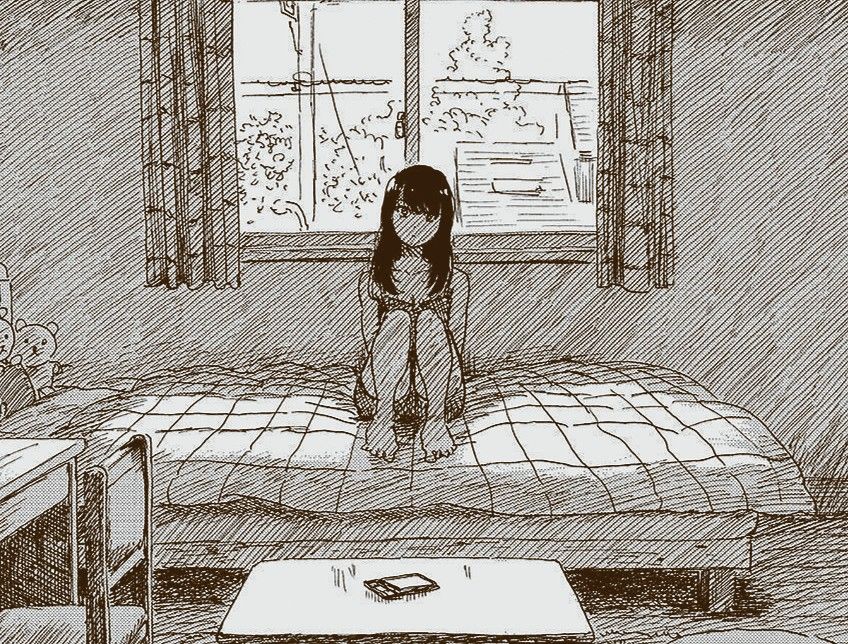
Komori isn’t wholly alone in this. Yori Kakiguchi, a quiet girl in the same class as Mari, notices a difference, and a deeply uncomfortable confrontation results. Emotions escalate and all number of accusations are hurled. Despite Kakiguchi’s initial disbelief, Komori eventually gains an unlikely ally in the masquerade of being Mari. Kakiguchi helps with makeup and insight into Mari’s various friendships, filling in the considerable gaps in Komori’s knowledge.
And even as the two flounder to cover up the “real” Mari’s absence, the fundamental question of what happened to the her haunts them. The obvious theory that what happened was a bodyswap is repeatedly toyed with — that is to say, Mari ended up in Komori’s body — but as Kakiguchi and Komori lurk around Komori’s old trash-littered flat, the answer doesn’t seem that simple at all. And the question of Where is Mari? cannot be extricated from the deeper and more difficult question of Who is Mari?
Kakiguchi and Komori are both people who have watched Mari and made assumptions about her — Kakiguchi rather more understandably and sympathetically than Komori, since she shared classes with Mari, but the parallels are still there. Neither could say they truly know her and the Mari they have constructed through observation continues to conflict with the one who lived and breathed and bought pornography.
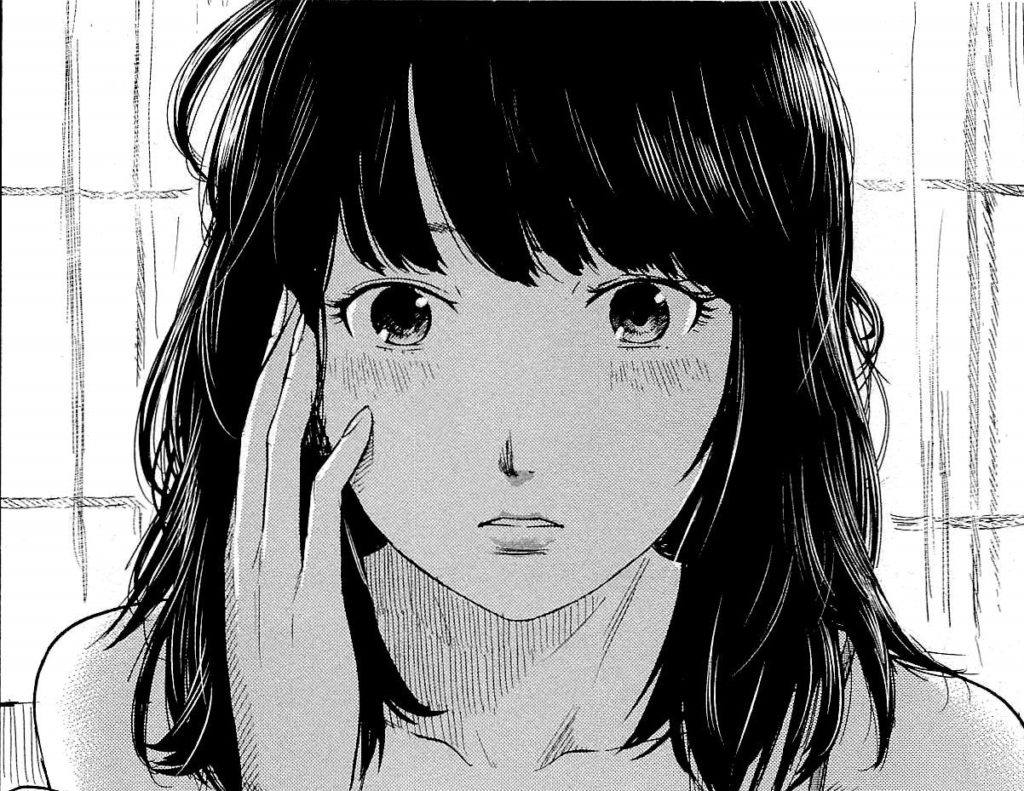
Kakiguchi is particularly uncomfortable with the idea of Mari as a sexual being, despite — and arguably because of — her own desire for Mari. They shared an intimate moment at the nurse’s office, but the need to maintain their own respective high school fictions have kept them apart. Now she is growing closer to Komori-as-Mari, but those feelings are themselves complicated and confused. Lust and disgust find themselves grossly intertwined as these characters try to confront their own messy sexualities and obsessions.
As time rolls on, it is painfully evident that no one but Komori and Kakiguchi misses the real Mari, that somehow the façade the two are concocting is enough to fool everyone — and one can’t help but wonder if anyone outside of these two have really seen Mari. Loved her, even. Even Mari’s actual best friend seems callous to Mari’s own problems and is quick to accuse Mari of seducing away her boyfriend, just as that boyfriend attempts to sex-pest his way into Mari’s affections. Time and again we confront the idea that Mari is desired and desirable, but that her own desires remain irrelevant to those around her.
There are echoes of Shuzo Oshimi’s other work, such as Happiness and Flowers of Evil, seeming to be about a young man struggling in the aftermath of a supernatural incident that is the sublimation of a sexual awakening, overflowing with complicated and inappropriate desires. Though radically different in both premise and details, there is still that exploration of power, guilt and desire amid the central characters — especially with a mysterious, desirable young woman acting as catalyst.
Being as delicate as I can be with the various late-series twists in the story, the ending of Inside Mari sits uncomfortably with me. It can very much be read as this bittersweet mix of plausible imperfections and optimistic new beginnings, but at the same time, it feels too much like a return to status quo. That we are seeing again the façade rather than the awakened, enlightened self. Perhaps it is just the return of the name Mari that sits poorly with me, as it has gained so much significance and history as an imposition and a construct.
But the last chapters matter almost less to me than the immediate urge to reread the whole manga after those twists I am verbally dancing around recontextualised everything. In a strange way, that reread felt more like the true ending to me, that dramatic shift in perspective and challenge in how identity and truth and bodies all mix together in fleshy frustration, or at least was, that was the lingering aftertaste when I finished.
Jeannette Ng is the author of Under the Pendulum Sun. Inside Mari is published in English by Denpa and available from All the Anime.
Kotori
August 6, 2025 2:36 am
This is obviously an old article but I've reread this series at least a dozen times after following as it released. I just wanted to comment on your views of the ending, and that I share your feeling of being uncomfortable with it. I think that was the point, as Oshimi often lets his endings breathe rather than having them resolve things in a concrete way, satisfyingly or not. I believe the ending of Inside Mari is supposed to leave you wondering if anything has changed at all. Will she wake up from the dream, or will she settle back into the façade for the sake of not disrupting her family any further than she already has (from a Japanese viewpoint, this is a very real option)? The possibility of "was all that for nothing?" being an option is very tragic, and it's often the feeling I get when I reread this manga. This was a really good article that explained the core elements of the series without giving away any compelling plot points. Thank you.